Sunday, September 4, 2011

Epazote & Frijole con Puerco: Yucatan Pork & Beans

EPAZOTE

Epazote ("eh pah ZOH tay") is an herb traditionally used to flavor black beans whose name is is derived from Nahuatl: epazōtl. It is believed to reduce the flatulence caused by beans, and has a distinctive flavor that you will recognize if you've eaten bean soup in Isla Mujeres. You will see it in most gardens or in containers on patios and roofs around the island.. It grows about three feet tall with tiny green flowers and a weedy appearance. It is an essential ingredient in Yucatan style pork and beans. Outside of Mexico, it is found in markets catering to people from the Caribbean or Latin America, or is available as a dried spice.

Frijole con Puerco
You are likely to find this dish in the "cocina economicas" in Isla Mujeres on Mondays, when it is traditionally eaten. Fresh condiments in abundance are a common feature of Yucantan  dishes, and this is no exception. Usual garnishes are onion, cilantro, limon, and radish, with a dish or two of hot sauce on the side. And of course fresh hot tortillas. The original recipe called for wild boar, which are still hunted in the interior of Quintana Roo.

2 cups dried black beans sorted and rinsed      
14 cups water
1 tsp lard or oil
½ onion
2 # boneless pork, cut into chunks
2 sprigs epazote
3-5 Serrano chilies
1 tsp salt
Place beans in a large pot, add 10 cups of water, lard & onion.
Boil 5 minutes.
Cook covered over medium heat for 1 hour.
Add pork, remaining water, epazote and chilies. Cook covered over medium heat for another hour. Add water as needed.
Add the salt and cook for 30 minutes. Adjust seasonings.
Serve with roasted salsas and fresh condiments, including cilantro, onion, radish, and limon.


Wednesday, August 31, 2011

Pitahaya or Dragon Fruit

 Food In Isla Mujeres


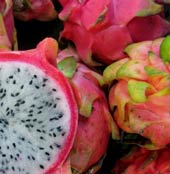
Pitaya (English), Pitahaya (Spanish), Wob (Maya), “chac wob” (pitahaya roja),  Hylocereus undatus, Cactaceae Family. "Dragon Fruit" 
     Pitaya vines grow in the tropics worldwide and are native to Mexico. It grows wild across the peninsula, but not in coastal areas. It is cultivated mostly in gardens, and has commercial potential as an agricultural crop. Agricultural production has been very successful, but there have been problems with marketing.
    
The cactus flowers at night in June and the aromatic colorful fruits are harvested until October.
      They have a meaty skin and a delicate translucent creamy flesh full of small edible seeds, similar to those found in a kiwi. It is eaten raw, is mildly sweet, and naturally low in calories. Its juice is used to make popular drinks  and it is served in fruit salads.. Its juice is used to make tasty ices and popsicles .(nieves and paletas). Fruit drinks that in English are 'ades' (mixtures of juice, water, and usually a sweetener) are called aguas or aguas frescas in Spanish.
There are two other varieties grown in the Yucatan. One is similar in size and taste, but plain yellow in appearance. The wild version is called pitahaya romaine ("xiquín" in Mayan), is more variable in size, and usually is not available commercially. 

Horchata or Iced Sweet Rice Milk

Food In Isla Mujeres

HORCHATA
   In Mexico this beverage is made from rice, water and sugar, flavored with cinnamon and vanilla. It is served cold as a popular type of "agua fresca". It is traditionally made by hand, but commercial preparations are also available. Its ingredients vary in other countries. Say:  "or CHAH tah"
   Here is a recipe that makes 2 quarts:

  • Rice -- 2 cups
  • Water -- 6 cups
  • Cinnamon -- 1/2 teaspoon
  • Sugar -- 1/3 cup
  • Vanilla -- 1 teaspoon
  1. Soak the rice overnight in 3 cups of the water. Add the rice, soaking water and cinnamon to a blender and puree until smooth, 2-3 minutes.
  2. Strain into a pitcher through a fine-meshed sieve or several layers of cheesecloth. There should be no grit or large particles in the liquid.
  3. Stir in the remaining 3 cups water, sugar and vanilla. Adjust sugar to taste and serve well chilled.

Mamey: A Tropical Fruit

Food In Isla Mujeres

Mamey   Mukuy ha'as (Maya), Mamey sapote  Pouteria sapota
Ripe fresh Mamey pulp is great for smoothies, mousses, creams, sorbets and other great tropical recipes   The Yucatan produces half of the mamey fruits sold in Mexico. The large native hardwood grows over 100 ft. tall with a broad lush canopy. The fruits are football shaped and 3-6 inches in length, with a rough brown skin and orange aromatic flesh that has the texture of a soft avocado. I love its slightly nutty flavor which is  reminiscent of sweet potato pie, and similar to an apricot. Its taste is compared to almonds, pumpkins, sweet potatoes, apricots, raspberries, and mangos, and is also described as slightly musky. In Isla it is commonly made into delicious liquados (smoothies), ice cream (helado & gelato), paletas (popsicles or icees), and sherberts. It is often flavored with cinnamon. 
   Mamey has many medicinal uses (Wikipedia claims it is an aphrodisiac.) It produces a lather used for dandruff that makes hair shiny. It is used for diarrhea, indigestion, and stomach pain. The seeds are used to treat wounds, cough, asthma, and heart disease, while the leaves are said to help alcoholics avoid alcohol.
     Locally, they are commercially harvested from January through June, while other varieties ripen in the fall.  This video tells how they are grown and harvested, and explains how to choose, prepare, and store them. You are likely to find Mamey liquados at loncherias and other places where residents dine.


Panuchos & Salbutes or Chicken Chalupas

Food In Isla Mujeres
Panuchos & Salbutes


The main difference between these two snacks is that the tortilla of a panucho is puffy, and may have white flour added to the masa and a salbute lacks refried beans. The marinated onions are essential and if they are authentic, they are prepared using the juice of a sour (Seville)orange. The meat is usually chicken, but can be turkey. Lettuce or cabbage and sliced tomatoes and avocado are garnished atop and you may notice a drizzle of media crema ( half milk/half cream) or a slice of hard boiled egg. They cost about a dollar each.
Here is a very authentic recipe.


Tamarindo or Tamarind

Food In Isla Mujeres

Tamarids are so common in Yucatan, they grow wild around rural villages and ornament urban streets.Tamarind (English) Tamarindo (Spanish), Pah-Ch'uhuk (Maya)  
The large tree, which originates in Africa, was brought to this area during colonial times, and its fruit is very popular among the Maya. The fruit pods hang in clusters up to six to eight inches long. The trees bear great amounts of fruits pods from April to July. When they ripen the outside skin becomes a brittle, easily-cracked shell and the pulp dehydrates naturally to a sticky paste. Their tartness overpowers their sweetness, making them an addictive snack for some who eat them fresh, while others prefer them sweetened in drinks and candies.They are aromatic and used in savory sauces. In the US they are an ingredient in Worcestershire sauce, in Mexico you will find them in chamoy sauces and snacks.
  In Isla Mujeres, you will find the popular beverage aqua de tamarindo and a variety of tamarind candies (dulces de tamarindos) such as  pulparindo, which contains sugar, salt, and chili peppers, making it simultaneously tart, sweet, salty, and spicy. A popular version is squeezed out of the 'head of clown' creating 'hair'; made by Hershey called Pelon Pelo Rico . That roughly translates as Bald Guy with Delicious Hair. There are also cocktails made from tamarind. (I have seen one at Mango Cafe.) Here is a Mexconnect article with recipes and more tamarind information.

Poc Chuc or BBQ Pork

Food In Isla Mujeres

Poc Chuc


Slices of pork marinated in sour orange juice and achiote recado, grilled, and served with a tangy sauce and pickled or grilled onions. 
  Recado: spice paste with some combination of cloves, cinnamon, black pepper, oregano, cumin, garlic, coriander, vinegar, and sour orange. Comes in many variations, of which the most common is achiote recado.

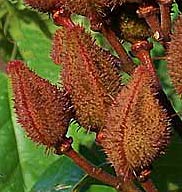
Achiote: from the seeds of the annatto plant, used for flavor in some recados and to add deep golden color to other dishes


Achiote is used in most traditional Maya cooking
Annatto ( English), 
Achiotl / Ku'u up (Maya), 
Achiote (Spanish),  
Native to Mexico, now grown in many countries for its great taste and natural coloring qualities.


 Su'uts' pak'aal (Maya) 
 Naranja-Agria (Spanish)
Green, with a thick bumpy skin, often used in sauces; tastes like a combination of lime and orange.


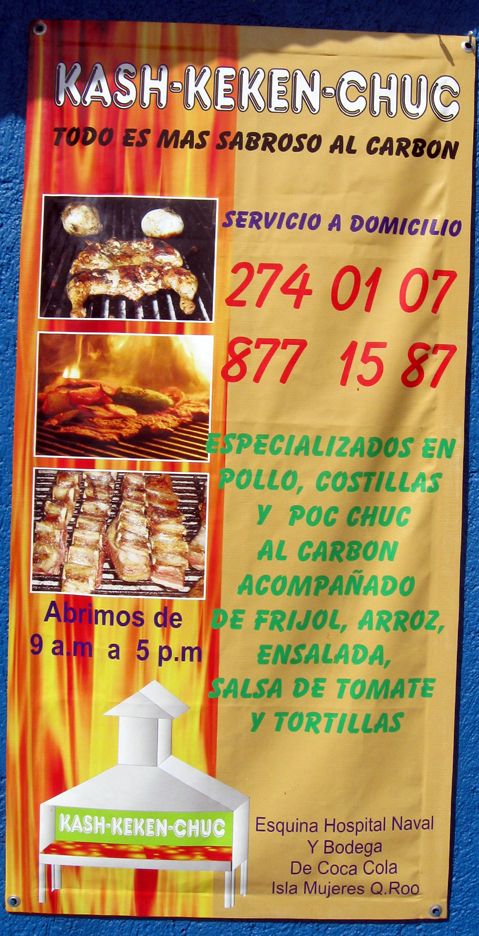
In Isla Mujeres, Kash Keken Chuc is a popular place to buy Poc Chuc al carbon (meaning it is grilled over charcoal), which they sell until 4pm, mostly to go, by weight. It is located on the west coastal road (Rueda Medina). If you are coming from downtown, it is at the first road that turns east (left), before the large speed bump. 


Tino "The Rib Man" is also well known for his version of this specialty, which he sells on Sunday mornings from a courtyard on Matamoras Avenue downtown, until he runs out. To find it, follow your nose.